Software & Remote Control Implementation
Developed a Bluetooth control app to enable synchronized launching of multiple dragsters for racing.
Programmed Arduino firmware to handle motor control, capacitor charging, and discharge sequencing for consistent acceleration.
Demonstration of the bluetooth remote on an early prototype
Power System Development
Selected and tested supercapacitor configurations to optimize energy storage and discharge rates for high-speed acceleration
Designed a custom motor control circuit integrating motor drivers, a Bluetooth-enabled Arduino, and power regulation components
Modular Control Box Design
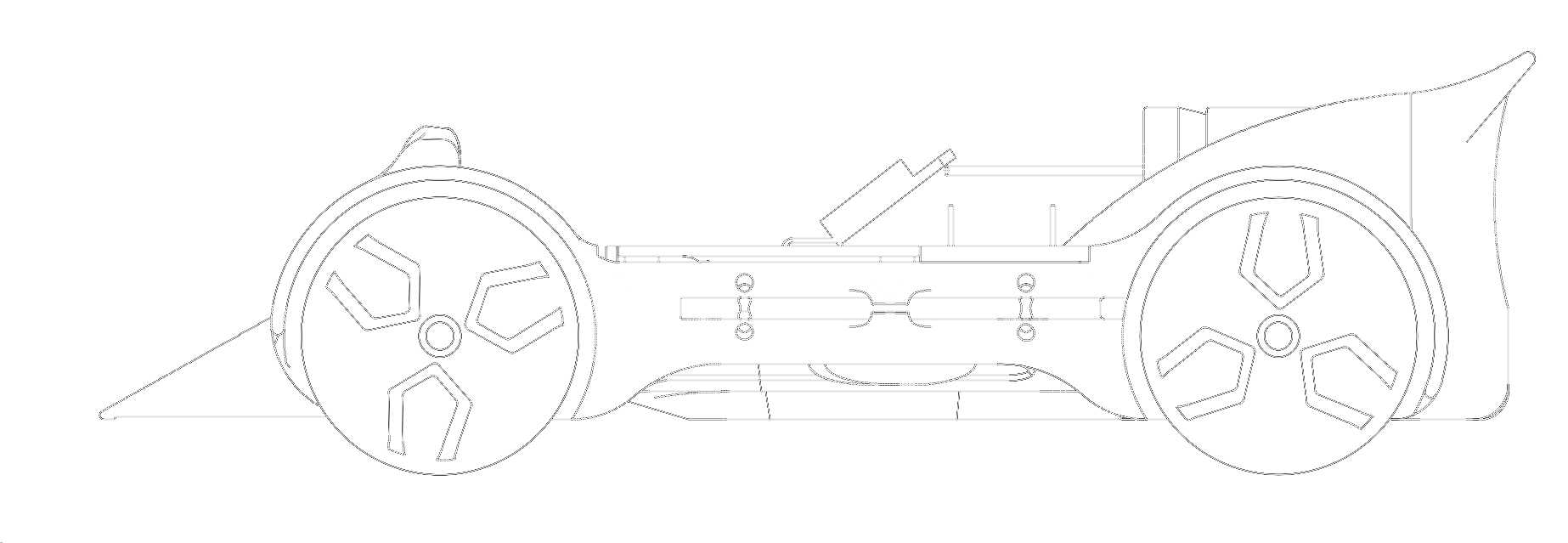
Developed a transplantable control box in Fusion 360, defining chassis constraints and standardized mounting points for student-built dragsters
Ensured plug-and-play compatibility so multiple teams could reuse the system across different vehicle designs
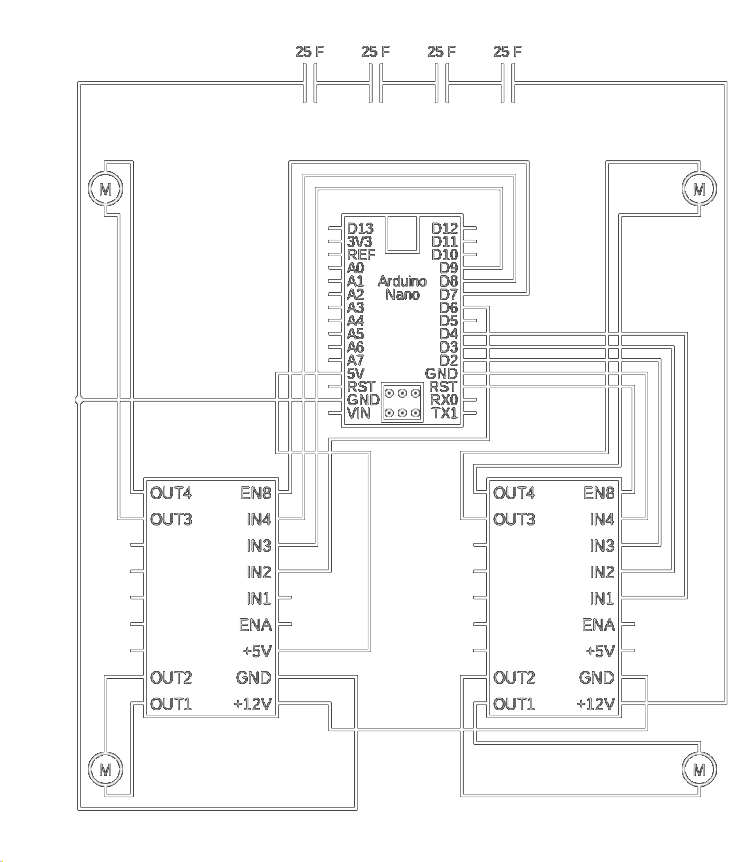
Circuit map of the vehicle
Aerodynamic Optimization
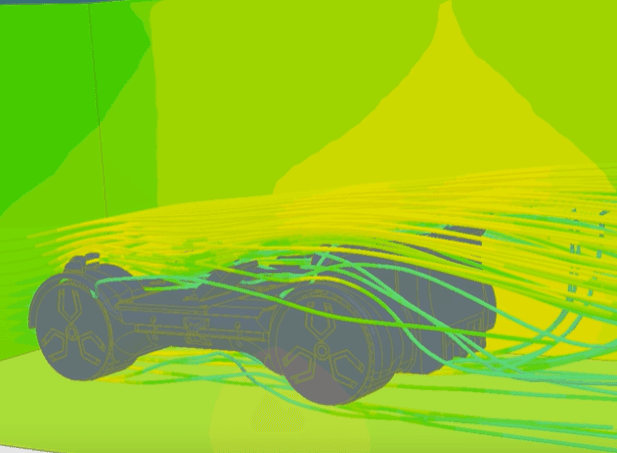
Designed a streamlined body shell integrating a diffuser, rear wing, side skirts, canards, and a front splitter to enhance stability and high-speed performance.
Conducted CFD simulations in SimScale, validating airflow behavior, including the upward curvature of air particles after the diffuser.