Supersonic Fin

Supersonic Fin

Optimization

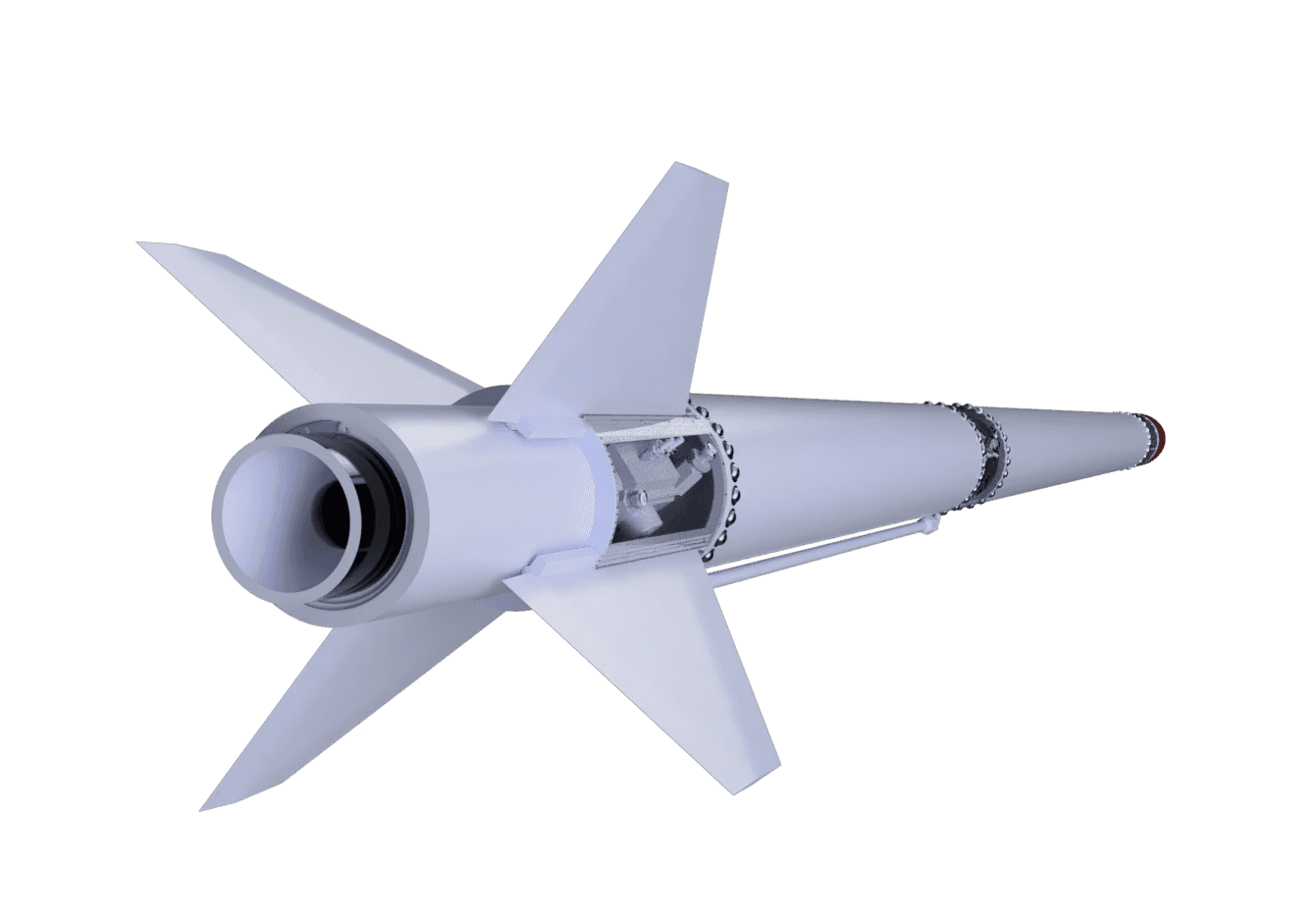
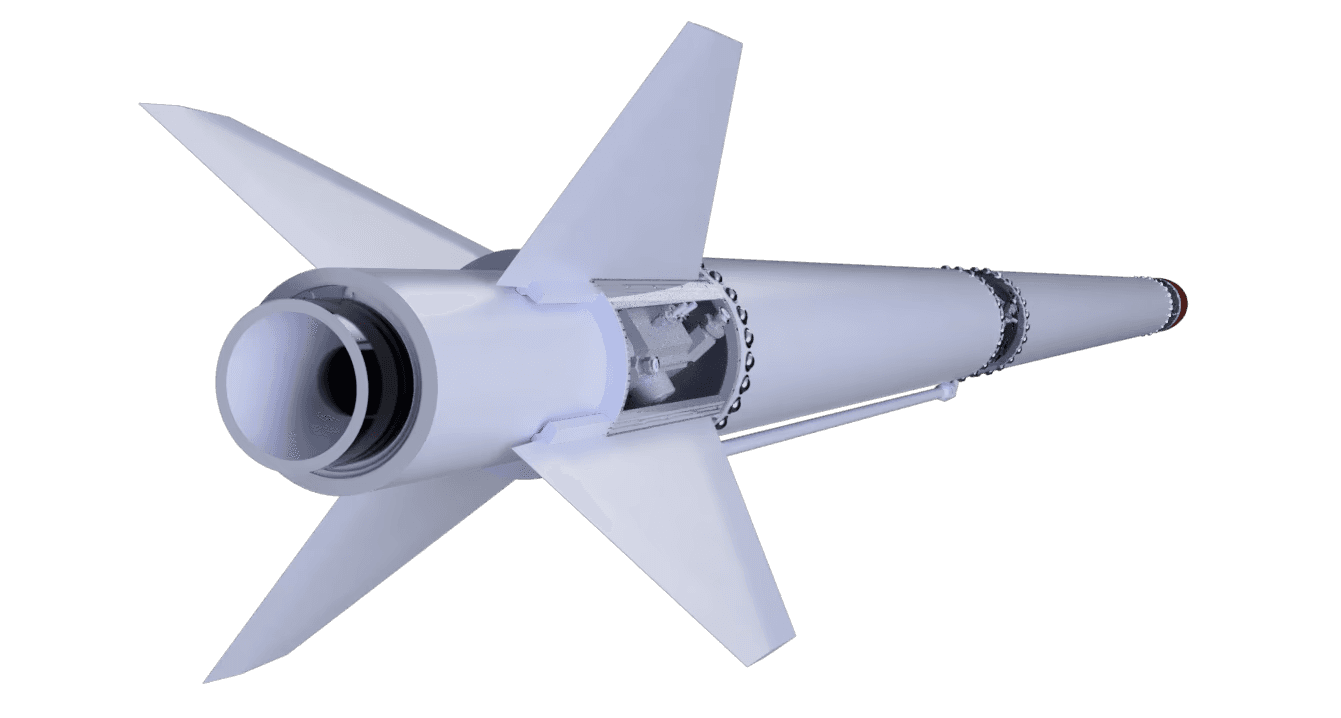
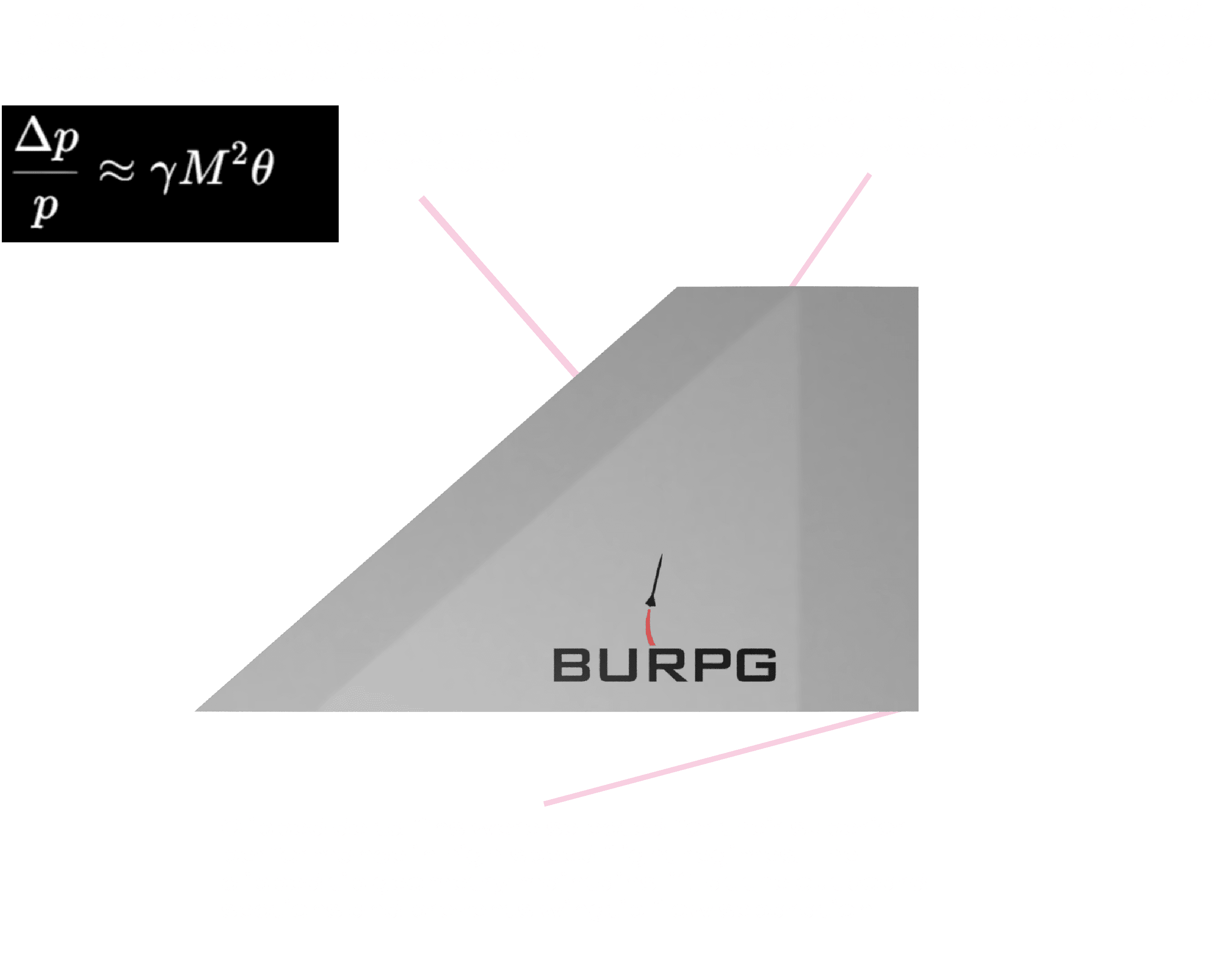
Optimize fin geometry for Mach 2.68 flight: maintain stability margin between 1.5 and 2.5 calibers, survive peak structural and stagnation temperature loads, and stay below flutter velocity across the full flight envelope while minimizing drag, mass, and manufacturing cost.
CAMDesign for Manufacture (DFM)FEAFluid MechanicsFusion 360GD&TMachine LearningMATLABRoot Cause AnalysisSolidWorksStructuresManufacturing Processes
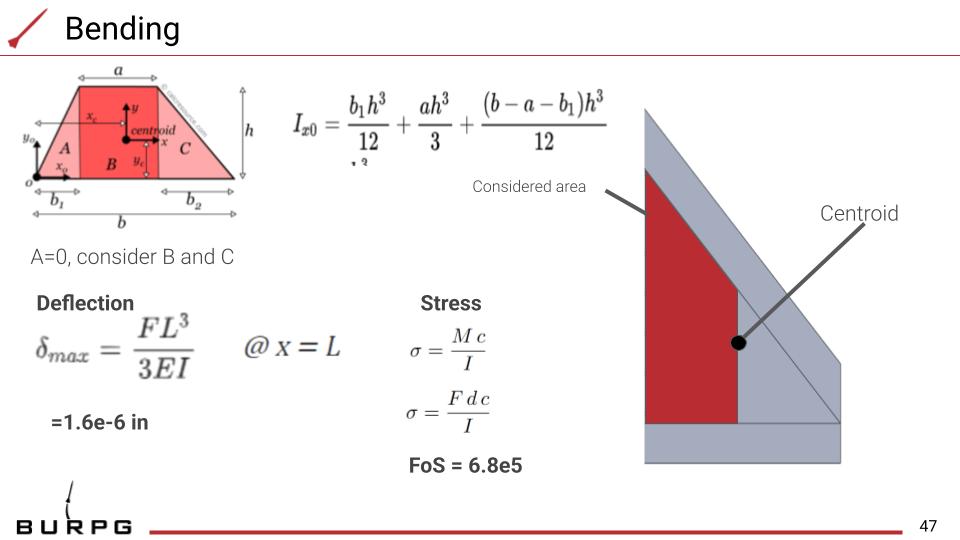
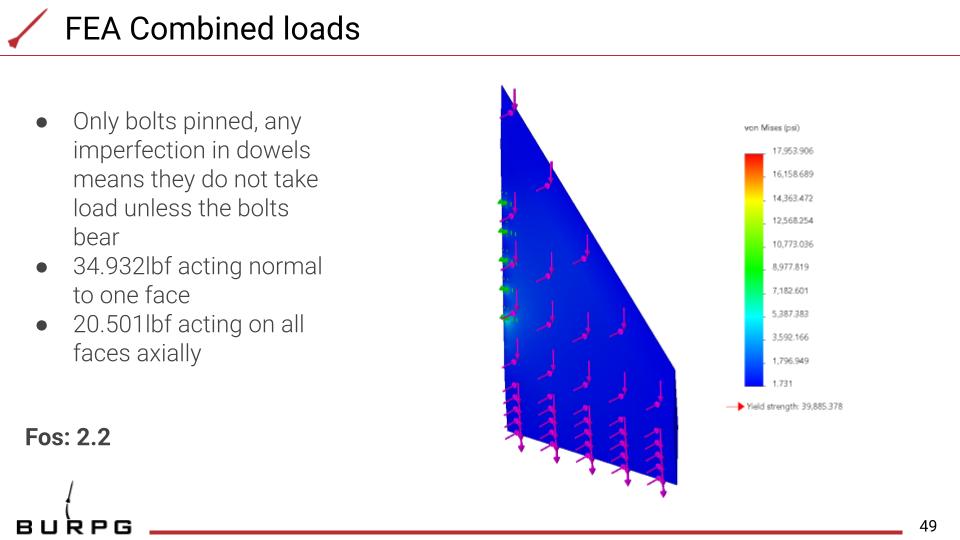
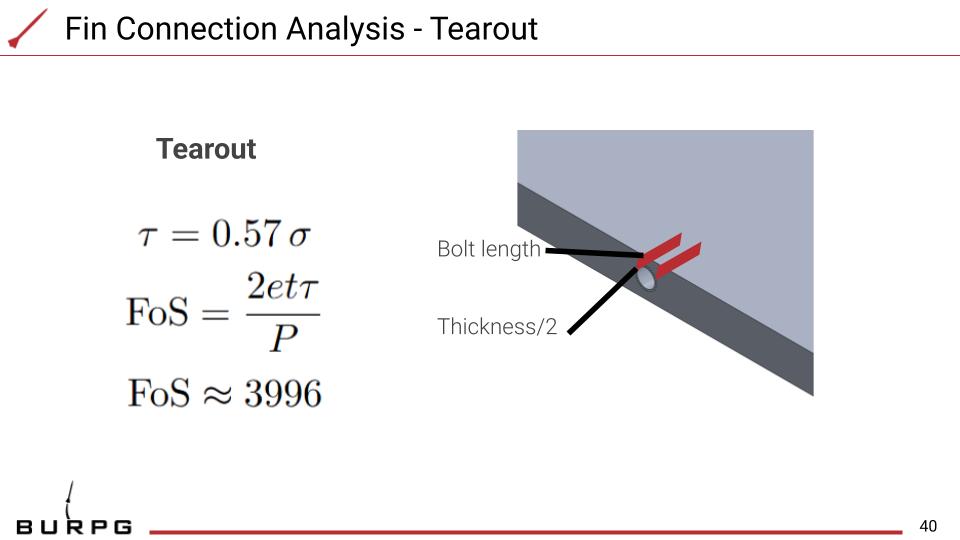
Structures Engineer: Led aerodynamic optimization, flutter analysis, and structural validation. Developed genetic algorithm implementation for multi-objective design space exploration and established manufacturing processes for CNC production.
Dec 2025 - Present
Optimization script achieved 23% average drag reduction while maintaining flutter velocity above Mach 3.08 and passing all structural load calculations. Validated design in SolidWorks FEA and developed CNC manufacturing process for production.

Design

Design

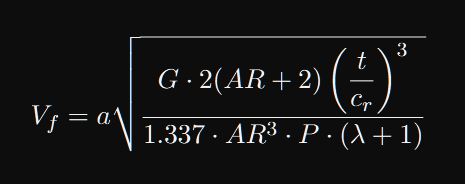
Fin flutter is a dynamic aeroelastic instability in which coupled bending and torsional oscillations extract energy from the airstream. When aerodynamic excitation matches the fin's natural resonant frequency, amplitudes grow unbounded. The critical flutter velocity Vf defines the boundary below which the fin remains stable. Flutter velocity was calculated using the empirical closed-form model from NACA Technical Note 4197 (Martin, 1958):

Fin flutter is a dynamic aeroelastic instability in which coupled bending and torsional oscillations extract energy from the airstream. When aerodynamic excitation matches the fin's natural resonant frequency, amplitudes grow unbounded. The critical flutter velocity Vf defines the boundary below which the fin remains stable. Flutter velocity was calculated using the empirical closed-form model from NACA Technical Note 4197 (Martin, 1958):

With this baseline, the following variables need to be optimized: Thickness, Sweep Angle, Leading Chamfer Depth, and Root Chord. Assuming 3” bounds for each length, a 20° range for the sweep and .001” tolerances, we have ~(3/.001)^5 = 2.43*10^17 candidate designs. To efficiently evaluate this space, a Genetic Algorithm (GA) was used.

With this baseline, the following variables need to be optimized: Thickness, Sweep Angle, Leading Chamfer Depth, and Root Chord. Assuming 3” bounds for each length, a 20° range for the sweep and .001” tolerances, we have ~(3/.001)^5 = 2.43*10^17 candidate designs. To efficiently evaluate this space, a Genetic Algorithm (GA) was used.

How the GA works:

  • Initialize the fin to our baseline design from a previous rocket

  • Set bounds for each parameter, eg thickness can be between .293” and .4”

  • Generate 50 fin designs with random modifications to each parameter

  • Take 12 fins with lowest drag while having flutter > mach2.68

  • Take these elite 12 and randomly vary each one, again taking the 12 best performers

  • Stop when the drag stops reducing or maxGenerations is hit

How the GA works:

  • Initialize the fin to our baseline design from a previous rocket

  • Set bounds for each parameter, eg thickness can be between .293” and .4”

  • Generate 50 fin designs with random modifications to each parameter

  • Take 12 fins with lowest drag while having flutter > mach2.68

  • Take these elite 12 and randomly vary each one, again taking the 12 best performers

  • Stop when the drag stops reducing or maxGenerations is hit

Load cases
01/04

Manufacturing

Manufacturing

In-house manufacturing is limited to 3-axis CNC, meaning the double-wedge cross-section cannot be achieved by tilting the head — instead, large-diameter face cutters are used for the flat angled faces and ball end mills handle the leading and trailing edge radii. This constraint makes surface finish a critical design consideration.

In-house manufacturing is limited to 3-axis CNC, meaning the double-wedge cross-section cannot be achieved by tilting the head — instead, large-diameter face cutters are used for the flat angled faces and ball end mills handle the leading and trailing edge radii. This constraint makes surface finish a critical design consideration.

Even at 5 thou stepover with an endmill, already prohibitively slow, this yields ~127 µm surface finish, costing roughly 11,500 feet of apogee per OpenRocket simulation. This is conservative: in the supersonic regime each scallop cusp generates a local oblique shock, with expansion and recompression repeating across every pass transition, compounding wave drag significantly. To mitigate this, a large-diameter ball end mill was selected to maximize R and suppress scallop height without proportionally increasing pass count, with finishing passes run at reduced stepover only on aerodynamically critical surfaces: the leading edge radius and wedge faces. Climb milling was specified over conventional cutting to reduce rubbing, minimize work-hardening, and improve surface finish on the aluminum. The setup avoids dedicated fixtures entirely, with the fin secured directly to the table and machined in multiple phases, clamps repositioned between phases to expose previously obstructed surfaces.
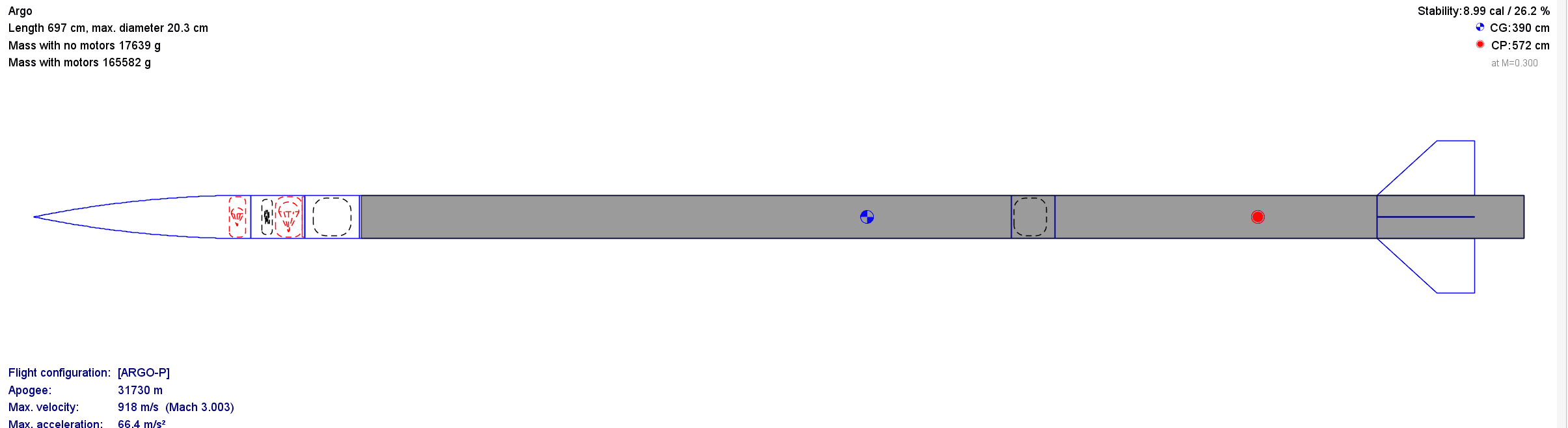
Even at 5 thou stepover with an endmill, already prohibitively slow, this yields ~127 µm surface finish, costing roughly 11,500 feet of apogee per OpenRocket simulation. This is conservative: in the supersonic regime each scallop cusp generates a local oblique shock, with expansion and recompression repeating across every pass transition, compounding wave drag significantly. To mitigate this, a large-diameter ball end mill was selected to maximize R and suppress scallop height without proportionally increasing pass count, with finishing passes run at reduced stepover only on aerodynamically critical surfaces: the leading edge radius and wedge faces. Climb milling was specified over conventional cutting to reduce rubbing, minimize work-hardening, and improve surface finish on the aluminum. The setup avoids dedicated fixtures entirely, with the fin secured directly to the table and machined in multiple phases, clamps repositioned between phases to expose previously obstructed surfaces.

OpenRocket

CAM