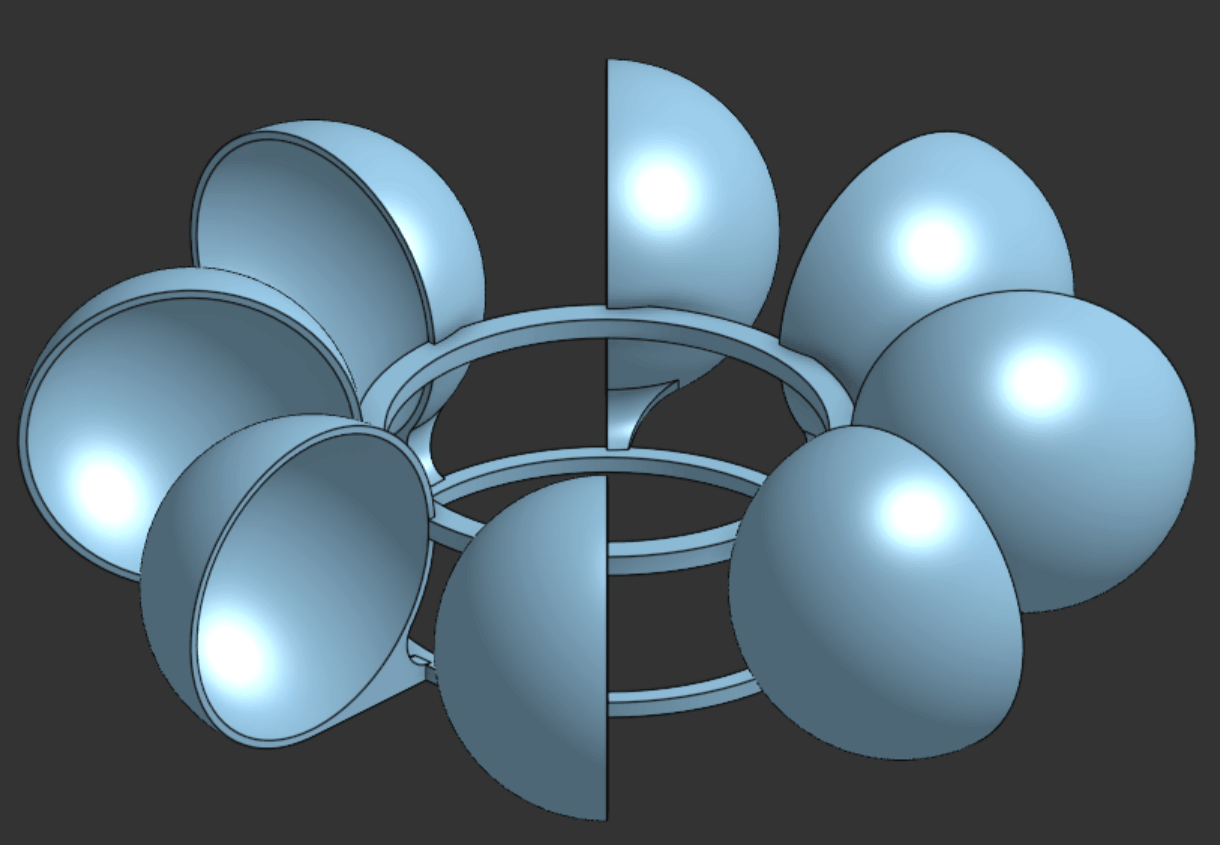
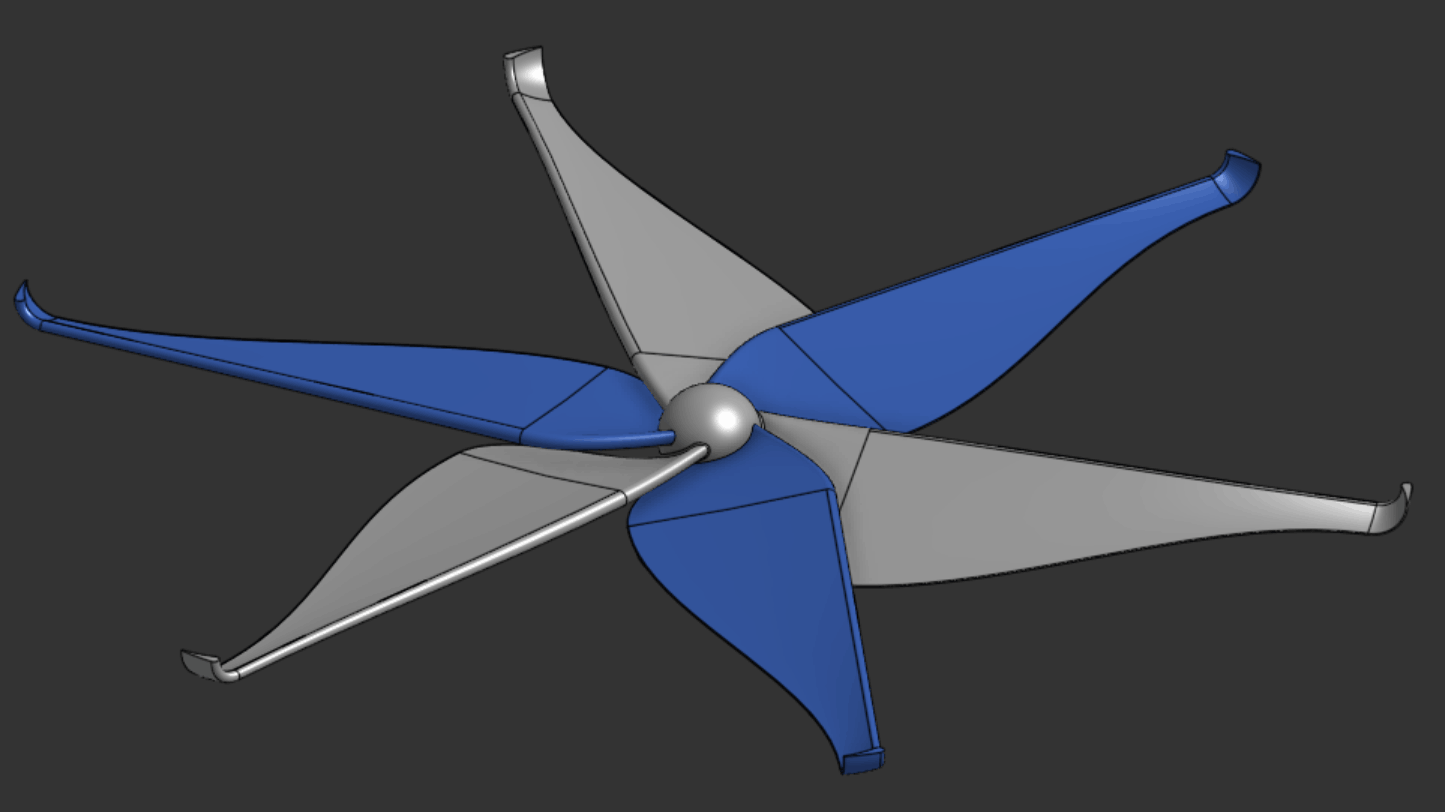
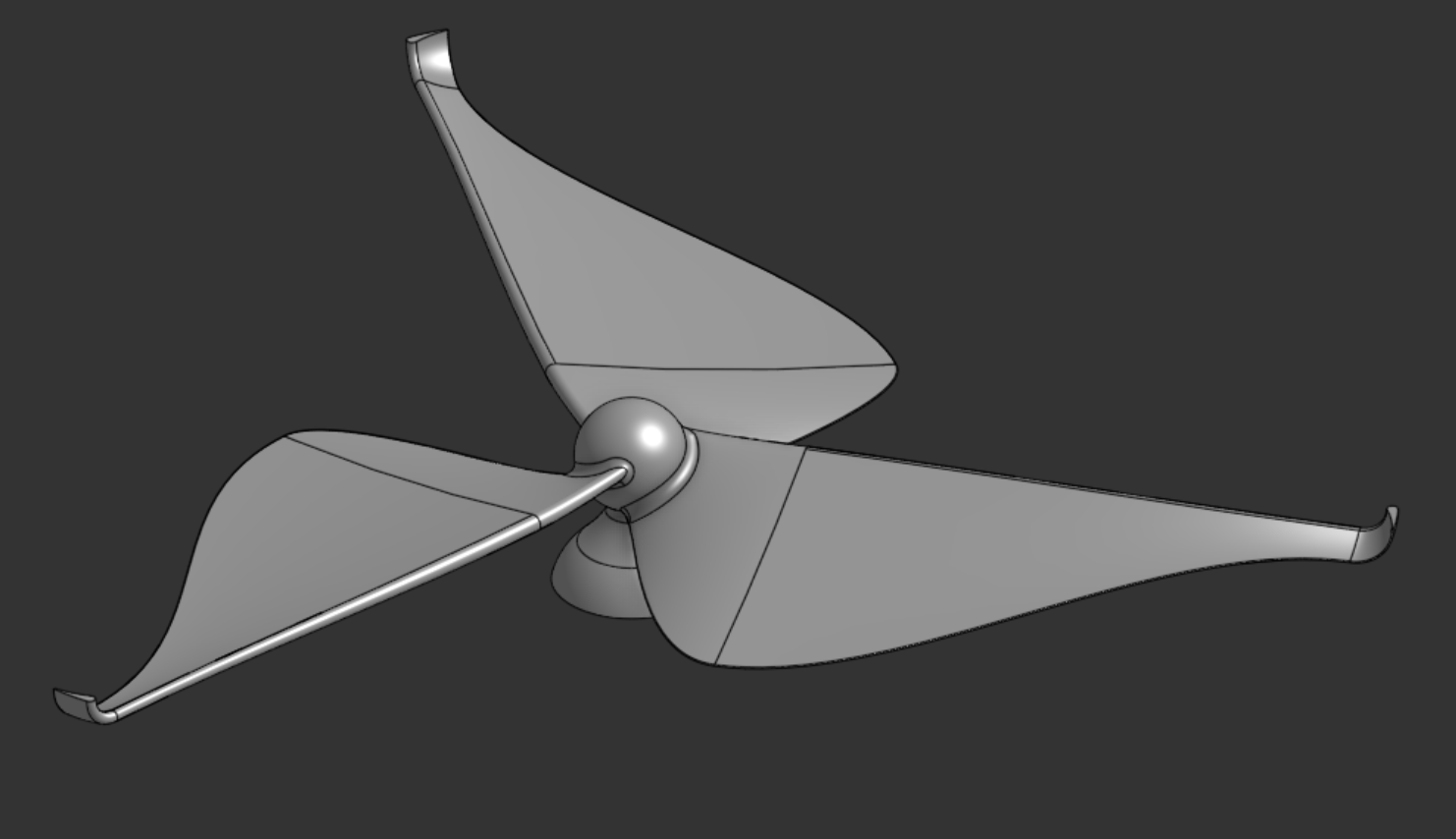
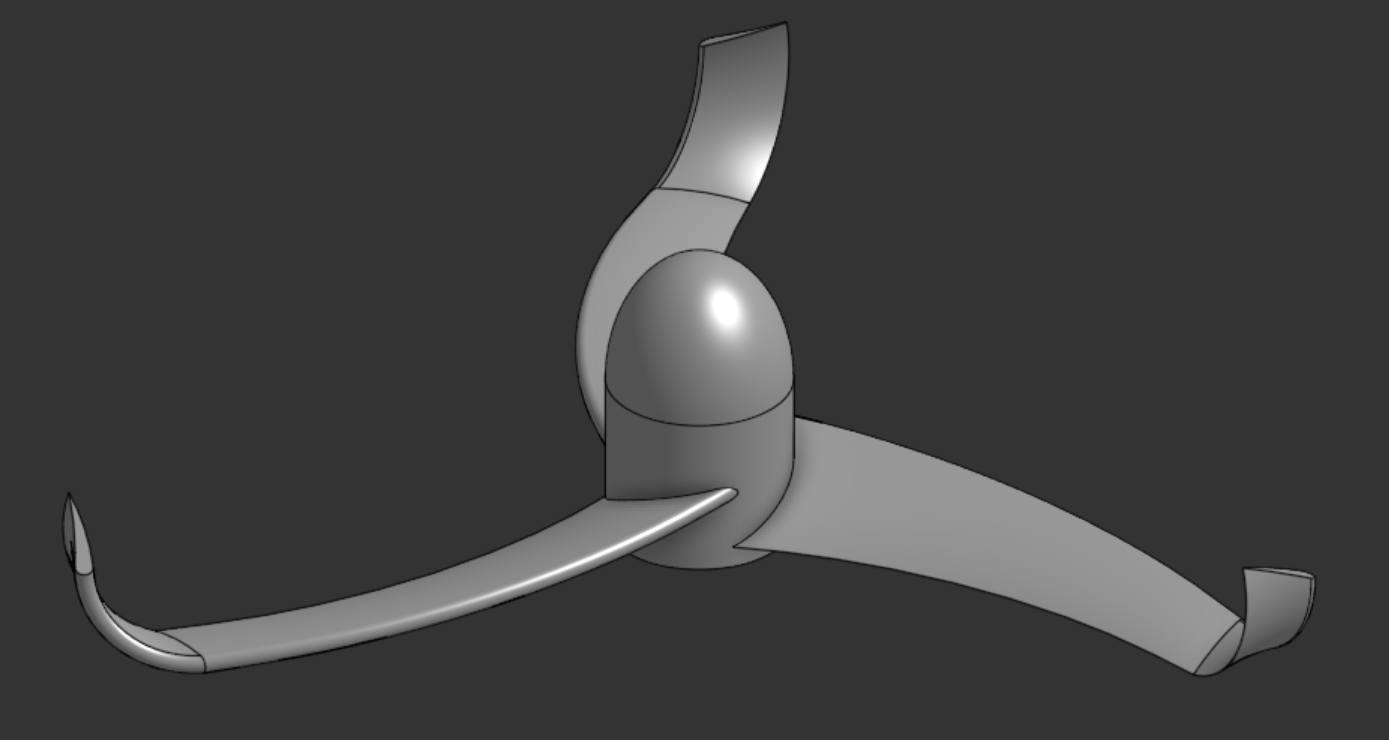
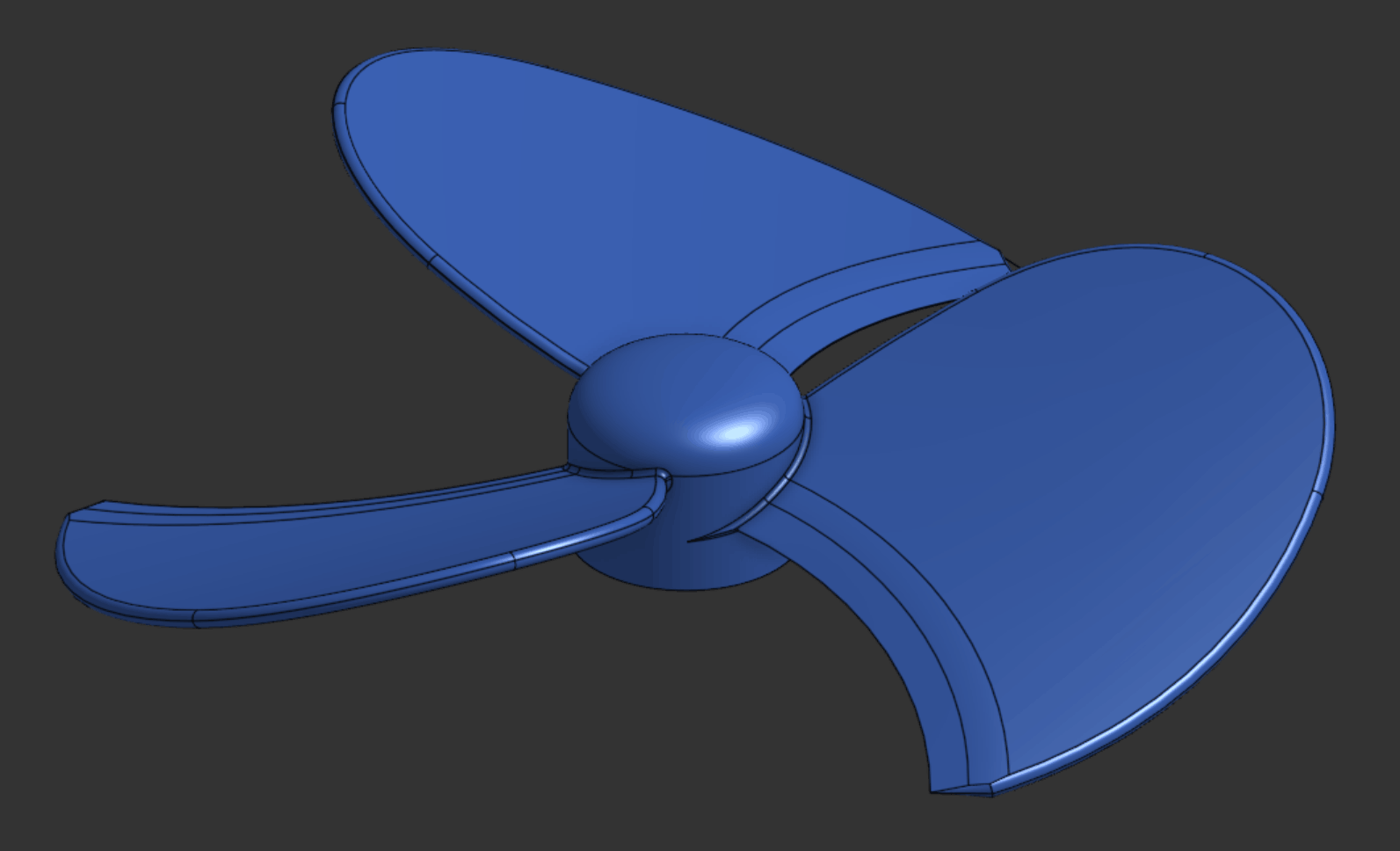
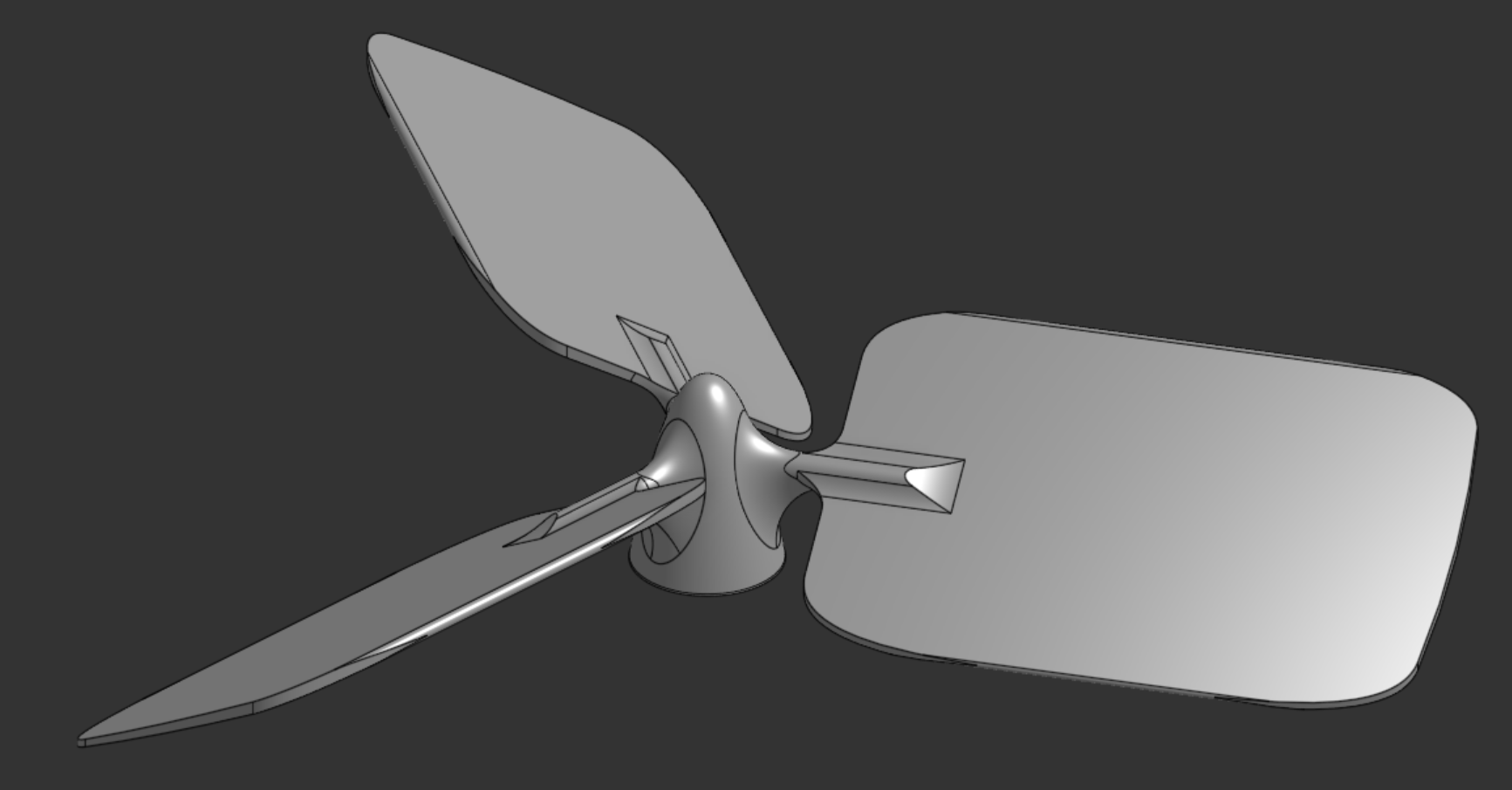
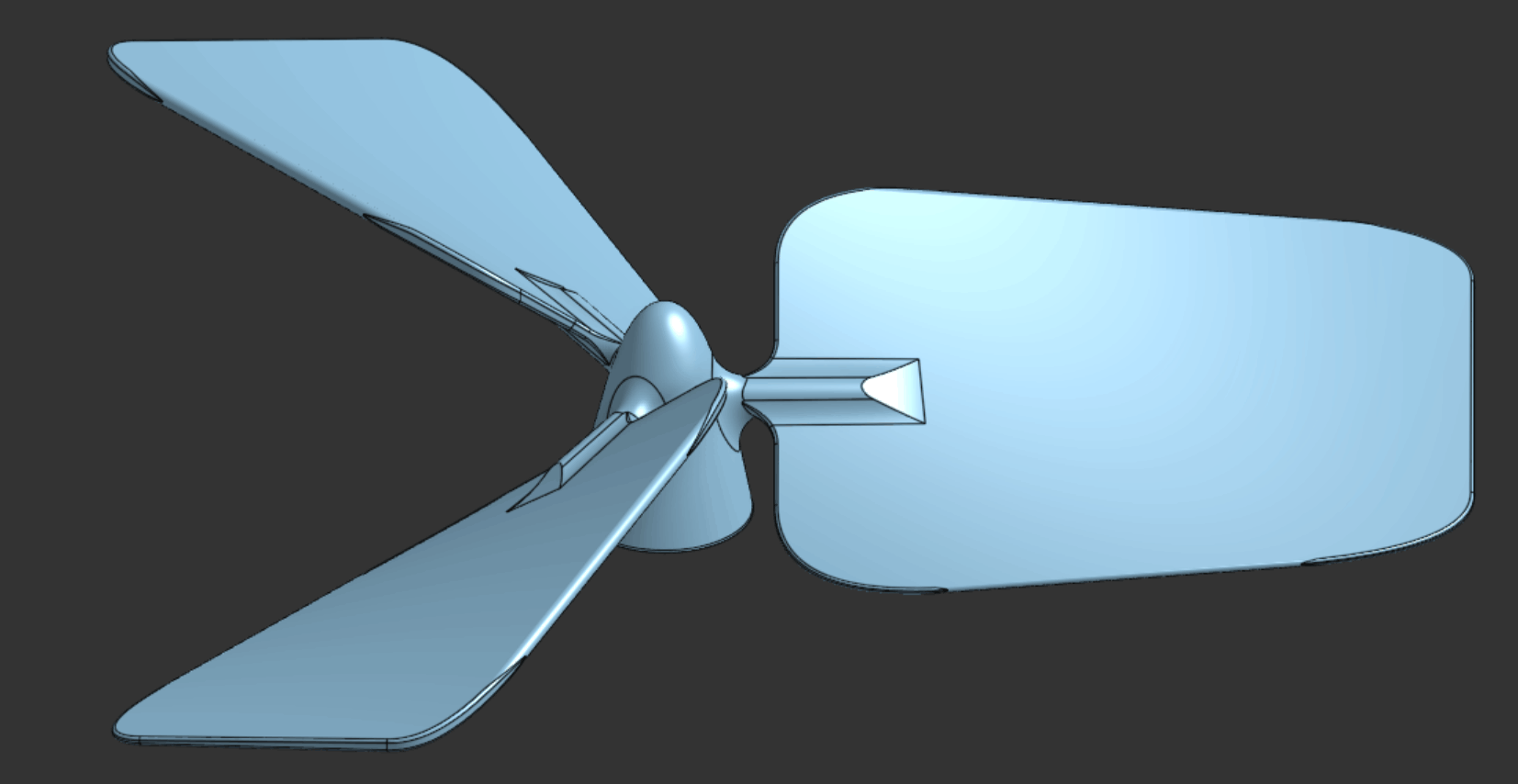
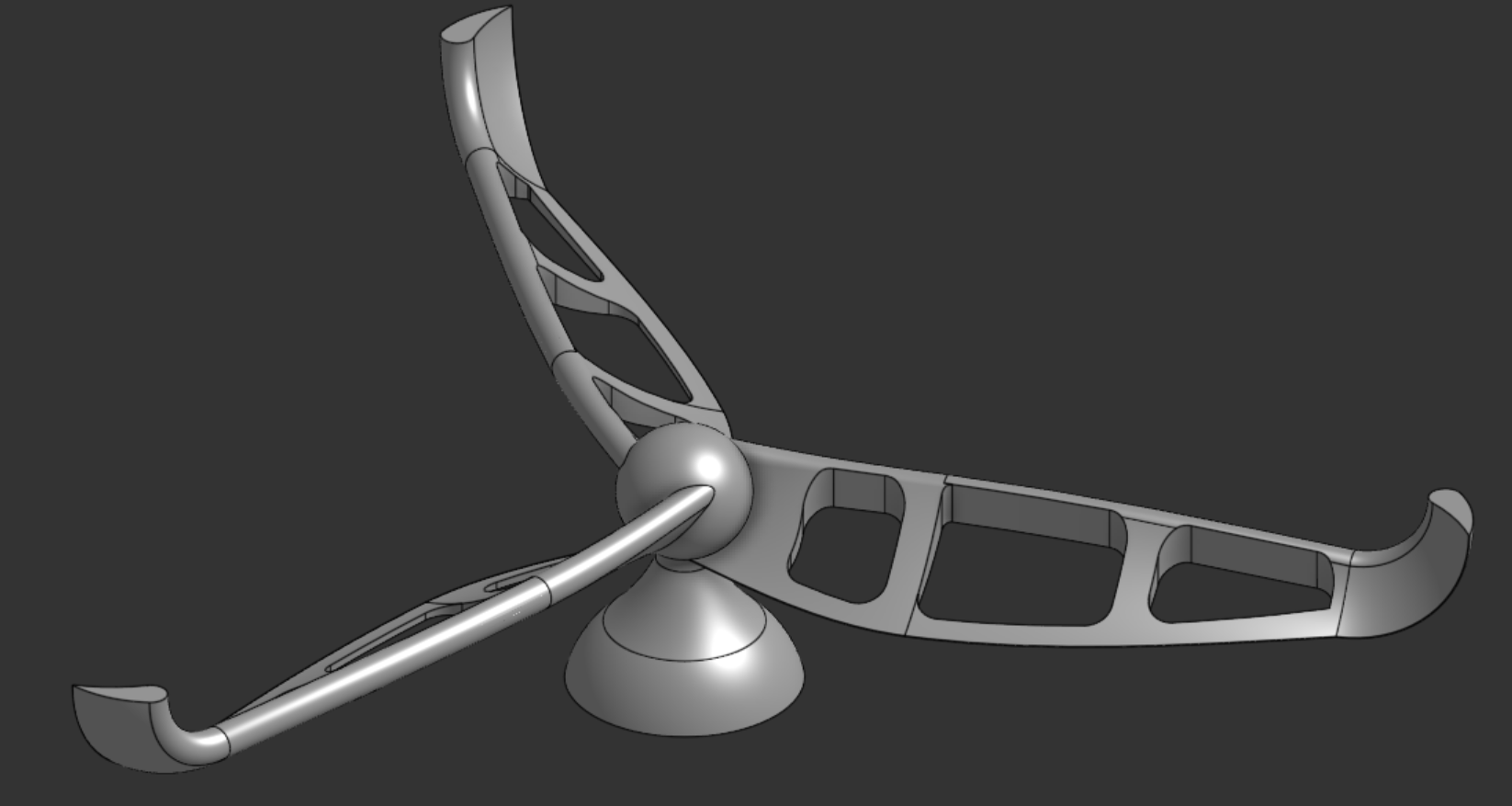
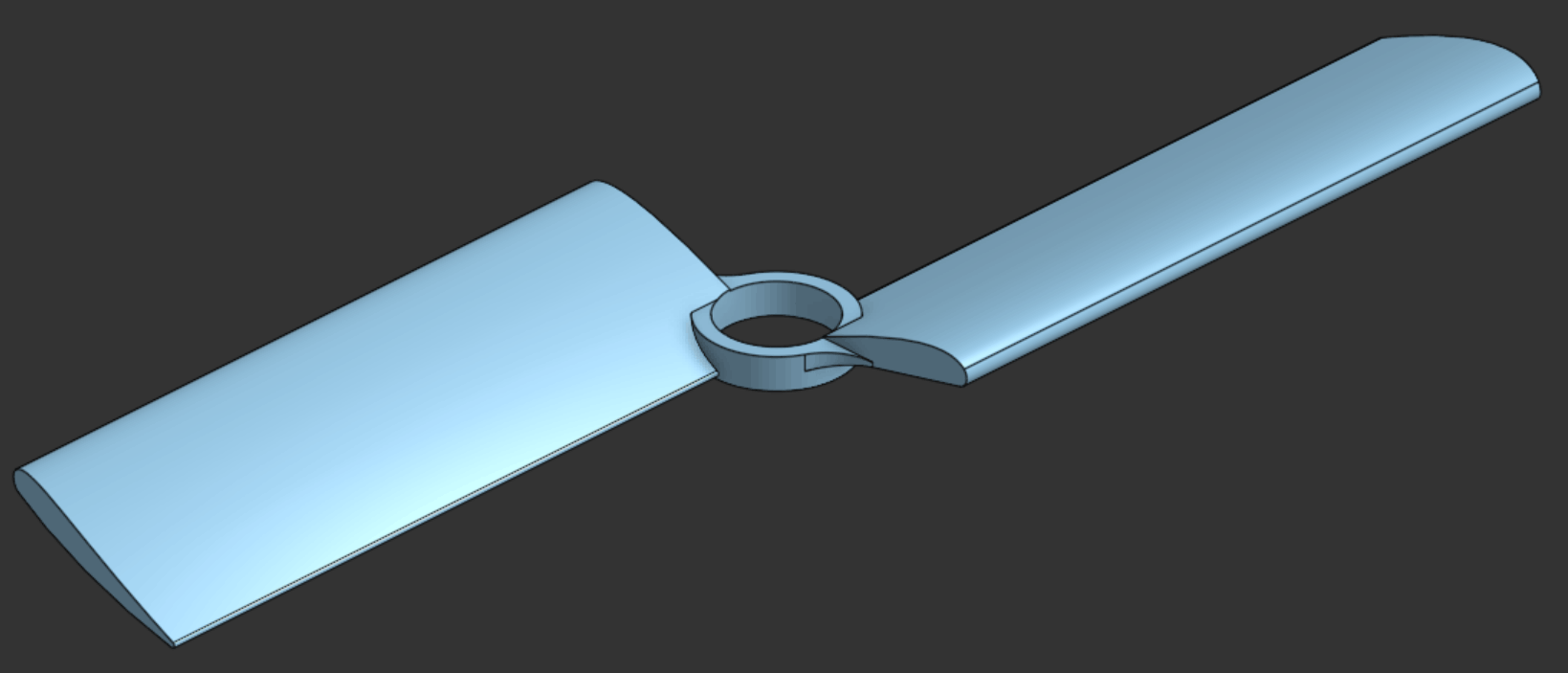
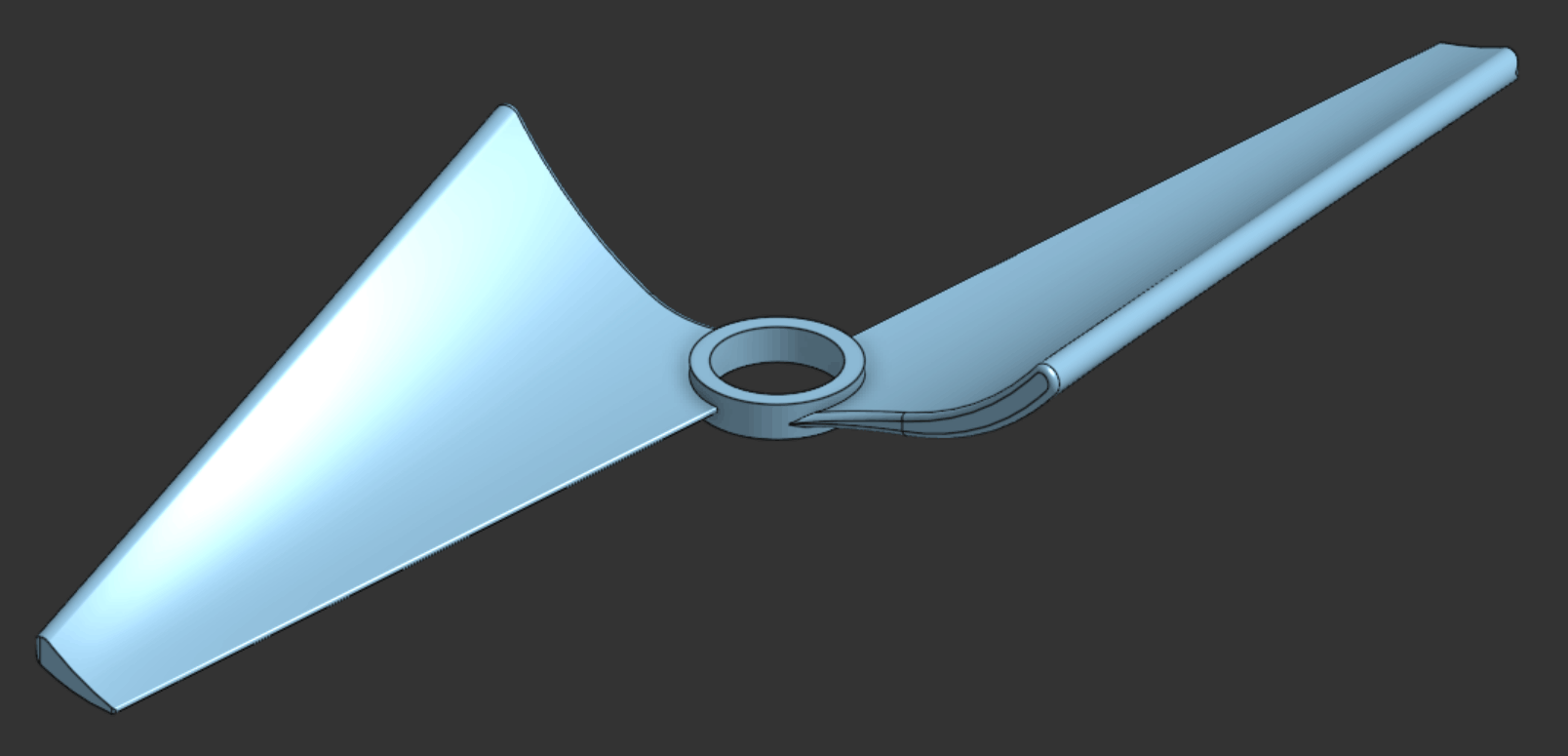
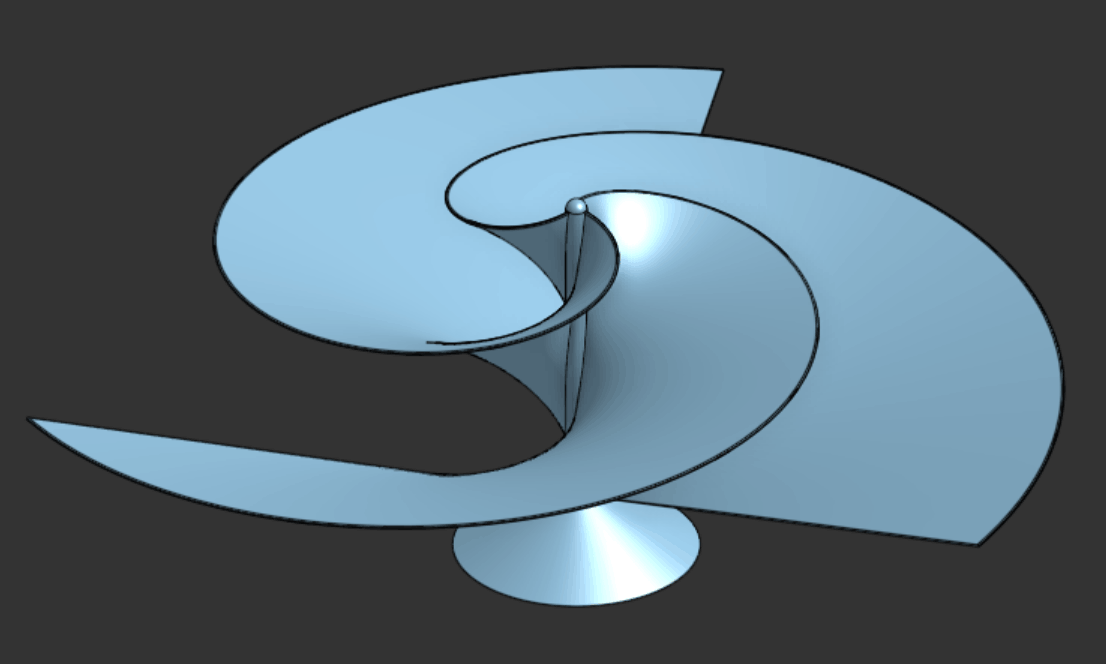
The goal was to maximize voltage output from a DC motor (targeting 5V at 1200 RPM under a 10 ohm load) using a custom turbine that fits within a 200mm diameter disk. Early prototypes used drag-based paddle designs, which proved inefficient due to asymmetric drag forces on the returning blade. This pushed us toward lift-based geometries, and we eventually settled on Archimedean spiral blades that balanced swept area with low separation losses.
No CFD or formal fluid calculations were involved, but the iterative process built real intuition for how surface geometry drives flow behavior. Designing the airfoil cross-sections by hand taught me how camber affects pressure differential, why leading edge radius matters for stall angle, and how chord length trades off lift coefficient against drag at low Reynolds numbers typical of small-scale turbines.